How to start trading in 2026 with a mechanical plan that turns market structure into repeatable decisions
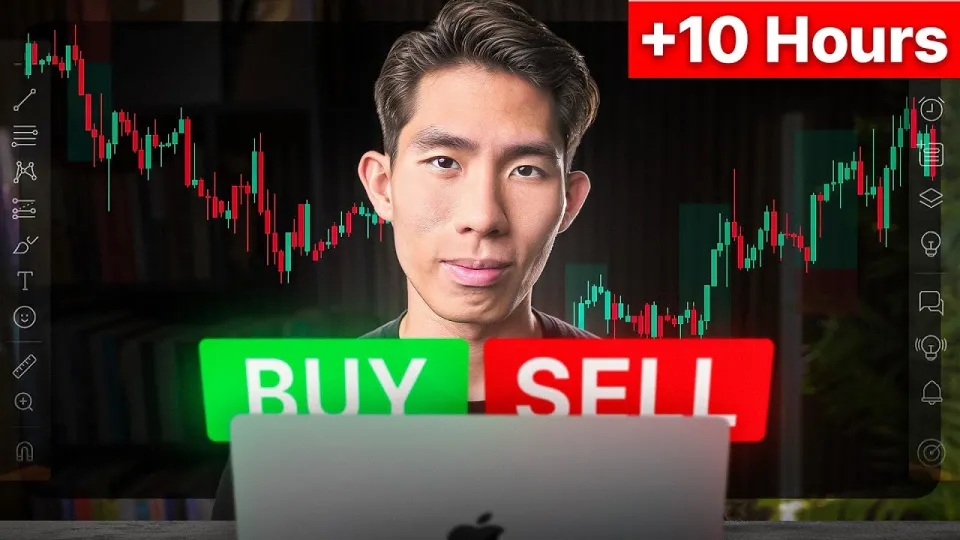
Video: How to Start Day Trading in 2026 (Full 10-Hour BEGINNER Course)
You can order the same kind of articles for your own video to boost it on YouTube and Google. Just message the Telegram bot @sat_sit_bot. It writes articles around your video, embeds the video and publishes them on popular niche websites (no ads). Free trial — 50 articles.
· based on the channel Brad Goh (The Trading Geek)
Trading is the business of buying and selling a market — usually forex, indices or crypto — to profit from short-term price movement, and the fastest way to start is to pick one market, build a written mechanical plan with fixed entry, exit and risk rules, and test it on a demo account before risking real money. A structured curriculum helps: Brad Goh (The Trading Geek) lays out exactly that path in a 10-hour beginner course, and the 1% Club mentorship page is where he points traders who want the full program with lessons, live calls and chart markups.
The core idea worth internalising before anything else: trading is not prediction, it is a repeatable process applied to a market that behaves in patterns. Everything below is built around that principle.
What trading actually requires before you place a first order
Trading demands three things before capital is at risk: a market you understand, a platform and broker you can trust, and a plan written down in advance. Beginners tend to skip the third item, which is why so many blow up accounts in the first months.
The practical starting checklist looks like this:
- Choose a single instrument. Most beginners start with a major forex pair because spreads are tight and sessions are predictable.
- Set up a charting platform with at least three timeframes visible — a higher timeframe for direction, a mid timeframe for the setup, a lower timeframe for the trigger.
- Pick a broker regulated in a jurisdiction you can verify, and confirm the spread, commission and leverage on the exact pair you intend to trade.
- Open a demo account and treat it as real: same position size logic, same journaling, same rules.
- Define your risk per trade as a fixed percentage of the account, not a fixed dollar amount, so the plan survives a losing streak.
A mechanical trade plan is the deliverable of this stage. It states what market you trade, what session you trade, what setup you need, where the stop goes, where the target goes, and what disqualifies a trade. If any of those answers is vague, the plan is not finished.
Market structure is the backbone of any trading method
Market structure is the sequence of highs and lows that tells you whether buyers or sellers currently control the chart. Everything else — supply and demand zones, order blocks, liquidity — only makes sense once you can read that sequence.
In an uptrend, price prints higher highs and higher lows; in a downtrend, lower highs and lower lows. When that sequence breaks, the market is either ranging or reversing, and the correct response is to stop looking for continuation entries.
Multi-timeframe structure extends the idea. A trader reads direction on the higher timeframe, waits for a pullback into an area of interest on the mid timeframe, and only then drops to the lower timeframe for a trigger. This is why so many beginners lose: they take a 1-minute signal against a 4-hour trend and wonder why the trade reverses immediately.
Supply, demand, order blocks and liquidity explained plainly
Institutional supply and demand are price zones where large orders were previously executed and where they may still rest. A demand zone is the last down candle before an aggressive rally; a supply zone is the last up candle before an aggressive sell-off. Price often returns to these zones, and the reaction there is the trade.
Related concepts that appear in the course and in smart money material generally:
- Flip zones — levels that acted as resistance and later hold as support, or the reverse, marking a change in the balance of power.
- Order blocks — the specific candle or cluster of candles from which a strong impulse originated, treated as the footprint of institutional positioning.
- Inducements — a move designed to trap early entries and build liquidity before the real move happens.
- Liquidity — clusters of stop losses above swing highs and below swing lows; price is often drawn to them, which is why a stop placed exactly at the obvious swing point gets taken out.
- Order flow — the way price travels from one area to the next, including the imbalances left behind by fast moves.
None of these concepts work as standalone signals. They work as a filter that tells you where a setup is worth taking and where it is not.
Risk management decides whether you survive long enough to improve
Risk management is the set of rules that keeps a single bad trade from ending your account, and it matters more than any entry technique. A trader with a mediocre strategy and strict risk control outlasts a trader with a brilliant strategy and no discipline.
The non-negotiables:
- Cap risk per trade at a small fixed percentage of equity — commonly 1%, rarely more than 2%.
- Place the stop loss where the trade idea is invalidated, then size the position to that distance, never the other way around.
- Set a daily loss limit and a weekly loss limit, and stop trading when either is hit.
- Track every trade in a journal with the reason for entry, the outcome and the mistake, if any.
- Reduce size after a losing streak rather than trying to win it back in one trade.
Position sizing is arithmetic, not intuition: risk in currency divided by stop distance in pips gives the lot size. Doing that calculation before every entry removes the emotional guesswork that destroys accounts.
Turning analysis into a mechanical trading strategy
A mechanical strategy removes discretion from the moment of execution, so the same setup produces the same decision every time. The course structure suggests three layers: market phases to know whether to be aggressive or patient, a step-by-step framework for qualifying a setup, and specific entry models.
A workable framework for a beginner:
- Identify the market phase on the higher timeframe — trending, ranging or transitioning.
- Mark the significant supply and demand zones and the liquidity resting above and below recent swings.
- Wait for price to reach a zone with a clear reason for a reaction, then look for confirmation on a lower timeframe.
- Enter with a defined stop beyond the zone, target the next opposing liquidity area, and record the trade.
Scalping on a 1-minute chart is a different discipline. It requires fast decisions, tight spreads and low latency, and it punishes hesitation. Beginners are usually better served by fewer, larger-timeframe trades while they build the habit of following rules. If a setup requires you to react in two seconds, it is not a beginner setup.
The questions beginners ask most often
Most beginner doubts repeat across every trading community, and they deserve direct answers rather than motivational slogans.
How much capital do I need? Enough that a normal losing streak does not change your life, and enough to trade a size where risk per trade is meaningful. Many brokers allow small accounts, but a small account with a 1% risk rule produces tiny returns — that is a feature, not a bug, while you are learning.
How long before I am profitable? Expect months, not weeks. The realistic sequence is: learn the mechanics, journal a few hundred demo trades, move to a small live account, then scale only after a stable record.
Why do I keep entering late or exiting early? Almost always because the plan is not specific enough. If the entry trigger is described in words rather than in exact chart conditions, hesitation fills the gap.
Is a losing day a reason to quit? No, but it is a reason to review. A single red day is data; a pattern of the same mistake is a system problem that needs fixing before size increases.
Useful links
- 1% Club mentorship — the full program referenced in the course.
- 1% Club main site — membership and program details.
- EdgeFlo — the all-in-one trading platform for execution, journaling and risk management.
- Recommended broker — broker referenced by the channel.
- Recommended prop firm — funded account challenges.
Final thoughts on starting trading the right way
Trading rewards process over prediction, and the traders who last are the ones who wrote down their rules before the market tested them. Start with one market, one plan and a risk limit small enough that mistakes are survivable, then let a journal tell you what to fix. Brad Goh (The Trading Geek) structures his 10-hour beginner course around exactly that order — foundations, structure, strategy, then mindset — which is why it works as a curriculum rather than a collection of tips. If you want the guided version with live coaching and daily chart markups, start at the 1% Club mentorship page. No course replaces screen time, but a good one shortens the path.
Key takeaways
- Brad Goh (The Trading Geek) built a 10-hour beginner course around four blocks: foundations, technical analysis, mechanical strategies and mindset.
- The technical block covers market structure, multi-timeframe structure, supply and demand, flip zones, order blocks, inducements, liquidity and order flow.
- Risk management gets its own crash course inside the technical section rather than being left as an afterthought.
- The strategy block includes a 3-step framework, a sniper entry model, a 1-minute scalping approach and a simplified trade plan.
- The mindset block focuses on a daily routine, a funded-account blueprint, deep focus and the habits of consistently profitable traders.
Questions & answers
How much money do I need to start trading?
There is no universal minimum, but the amount should be money you can lose without changing your life. What matters more is position sizing: with a 1% risk rule, a small account simply produces small results, which is appropriate while you are still proving the process on a demo account.
How long does it take to become consistently profitable?
Realistically months of deliberate practice, not weeks. The usual path is learning the mechanics, journaling a few hundred demo trades, moving to a small live account, and scaling only after a stable record across different market conditions.
Is 1-minute scalping suitable for beginners?
Usually not. One-minute charts demand fast decisions, tight spreads and emotional control, and beginners tend to enter late or exit early under that pressure. Larger timeframes with fewer, better-qualified trades build the discipline that scalping later requires.
Why do I keep losing even when my analysis is right?
The usual causes are stops placed at obvious swing points where liquidity rests, oversized positions, and entries taken without a defined trigger. Fixing risk and making the entry conditions exact solves most of these cases before any strategy change is needed.
Source: How to Start Day Trading in 2026 (Full 10-Hour BEGINNER Course) · Markdown version